COVID-19 Third Wave Hits Tourism in Q2... Expected Loss of Over 130 Billion Baht in Domestic Tourism Revenue in the First Half of 2021 (Kasikorn Research Center)
COVID-19 Third Wave Hits Tourism in Q2... Expected Loss of Over 130 Billion Baht in Domestic Tourism Revenue in the First Half of 2021 (Kasikorn Research Center)
As we enter the second quarter of 2021, the resurgence of COVID-19 in the country marks the third wave of outbreaks, which is bad news for the tourism sector that was just beginning to recover after being halted due to the previous outbreak at the end of last year. According to the latest data from the Ministry of Tourism and Sports, domestic travel among Thais in February 2021 increased by over 30% compared to January 2021, a month that saw significant impacts from the second wave of COVID-19, with only 4.51 million domestic trips taken by Thai tourists.
The third wave of COVID-19 has resulted in a larger number of clusters of infections, particularly in Bangkok and spreading to several provinces since early April. This has prompted authorities to elevate monitoring measures again, requesting cooperation for remote work and discouraging inter-provincial travel.
This situation has led Thai tourists with travel plans for the second quarter to postpone their trips, especially during the Songkran festival in 2021. Preliminary data shows that many tourism businesses, such as tour operators and hotels in various tourist areas, have seen cancellations due to tourists' concerns about the outbreak and uncertainty regarding future disease control measures. This is reflected in a survey by Kasikorn Research Center, which found that most Thais are sensitive to news about COVID-19 outbreaks and are ready to cancel or postpone their travel plans at any time. Kasikorn Research Center estimates that the impact of this COVID outbreak will result in a loss of no less than 10 billion baht in tourism-related revenue, compared to previous forecasts made in March 2021, before the third wave occurred. Meanwhile, travel plans for Thais during this period remain at risk due to the ongoing outbreak and the disease control measures in each province.
- COVID-19, which is still ongoing, will affect domestic tourism revenue in the first half of 2021 to be lower than expected, and there remains a high risk for the remainder of the year.
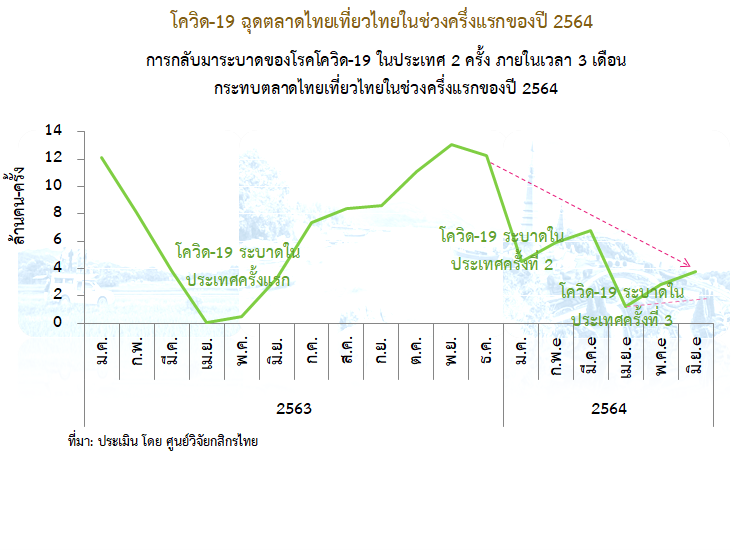
It is anticipated that the third wave of COVID-19 may take longer to control than previous outbreaks due to the relatively high number of infections and the fact that the virus strain is different from earlier ones, which medical experts indicate spreads more rapidly. The outbreak originated in Bangkok, a province with a high level of economic activity, and this wave occurred just three months after the previous one, making it difficult to avoid impacts on the domestic tourism market in the first half of 2021.
As a result of these events, Kasikorn Research Center estimates that the domestic tourism market in the first half of 2021 will be valued at approximately 137 billion baht, with a loss of over 130 billion baht in tourism revenue compared to earlier forecasts made in January 2021.
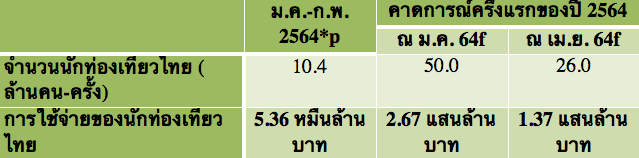
Source: Estimated by Kasikorn Research Center
*Data from the Ministry of Tourism and Sports
Even if authorities can control the third wave of COVID-19, the outbreak is not expected to end soon, both domestically and internationally. Although vaccination efforts have begun, the supply is still limited, and the effectiveness of the vaccine in preventing transmission is not yet confirmed. Additionally, the duration of protection against COVID-19 remains uncertain, meaning that the tourism industry in the second half of 2021 will have to operate under a highly uncertain environment.
Kasikorn Research Center emphasizes that it is crucial at this time to build public confidence through accelerated vaccination efforts, providing diverse options for vaccine procurement to ensure that as many Thais as possible are vaccinated quickly and comprehensively. Furthermore, it should be considered that individuals may need to receive multiple vaccine doses over the coming years. In addition, cooperation from all sectors is essential to control the outbreak swiftly, and once the situation improves, all sectors should maintain strict standards for COVID-19 prevention. Operators must also be prepared to adapt to changes that may arise at any time, both in terms of policy risks and market environmental factors, to mitigate the long-term impacts on the economy and tourism.